

How I Got Started
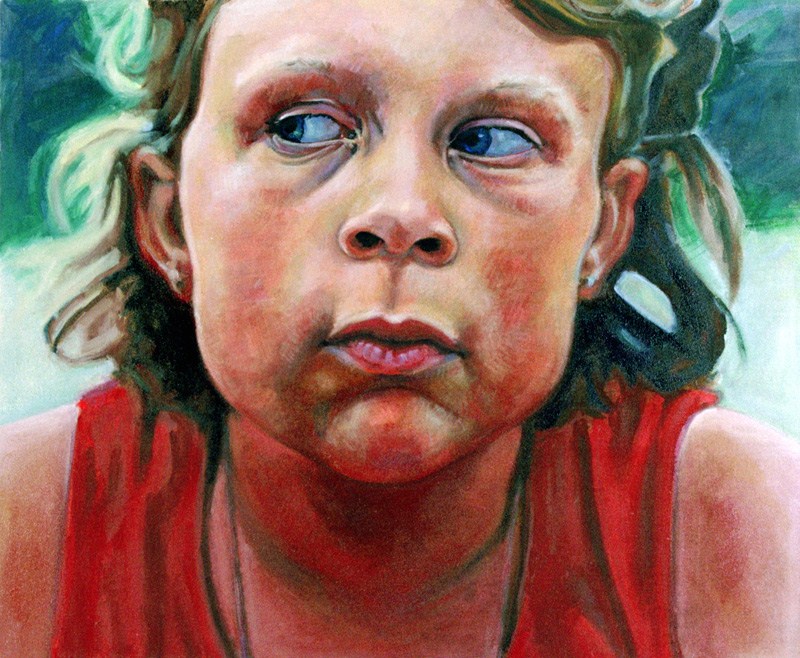
When I was just out of college, trying hard to make money doing portraits, I wrote to one of my favorite artists, Michael Shane Neal, for some advice. A couple of weeks later I was shocked to receive a three page, handwritten letter, chock full of great information. At the end of this letter, Michael wrote, “The best way to improve your skills is to do some kind of art every single day.” I thought, yep, heard that before, and continued to ignore the best advice I’d ever receive. (one of my portraits, Hannah, above)
What followed were five years of struggle for me. All we’d ever done in college were huge paintings, and since I still wasn’t making money, I was building my own stretchers and stretching and priming each canvas. Every painting was a huge investment of time and, even though I was being frugal, money.
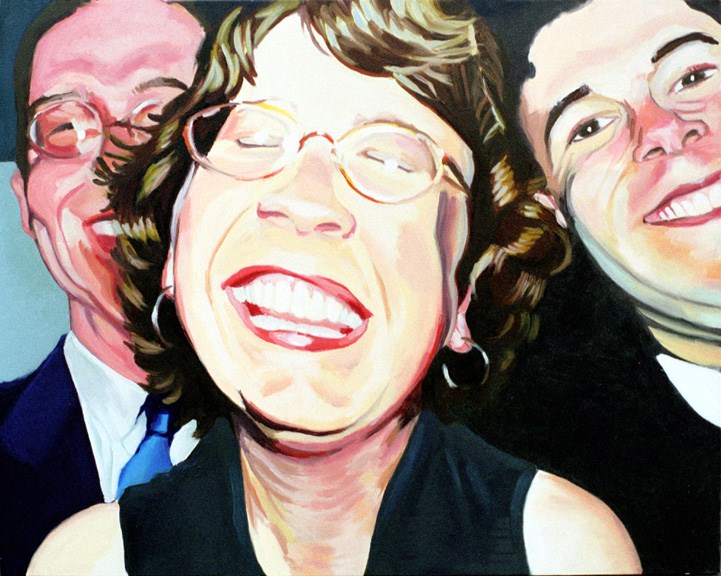 Unfortunately, my education in art from the University of Texas had been seriously lacking. My professors were more interested in discussing the politics behind the art than any kind of technical skills. I never once heard a lecture about value or composition, much less how to sell art. In fact, I told them I eventually wanted to earn a living with my art and they called me a sell-out!
(a painting I did in college)
After college, with this poor foundation, I found myself waking up every morning thinking “What should I do today? Should I go into the studio or … clean the house?” And more often than not, I would clean the house, or do any other task that would help me avoid the studio. For about 5 years I had the cleanest house on the block! But I was also thoroughly depressed. There I was, following my dream of being an artist, and I was riddled with fear and guilt.
 Finally, after switching to web design and failing miserably at marketing, I decided things had to change. I set a new goal. I gave myself six months to do ten (hopefully) fabulous paintings that I would take to my favorite gallery in town. If they didn’t take me in, I’d take it as a sign and find another career.
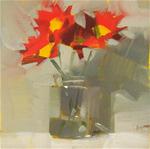
So I did my ten paintings and took them to the gallery and the heavens must have shined down on me, because not only did I get in, but they sold one as I was driving home! So I started painting full-time again. Unfortunately, I was hit by the same dilemma as before: maybe one out of every three paintings was saleable and the others were costing me a lot of time and money (this pink flower is one of the better ones)
After a while, I found myself making excuses again. I had all the time in the world and yet was only getting into my studio a couple of days a week.
At about the same time, my husband and I adopted our son, Jacob. This gave me the best excuse of all: I can’t paint – I have to take care of the baby!
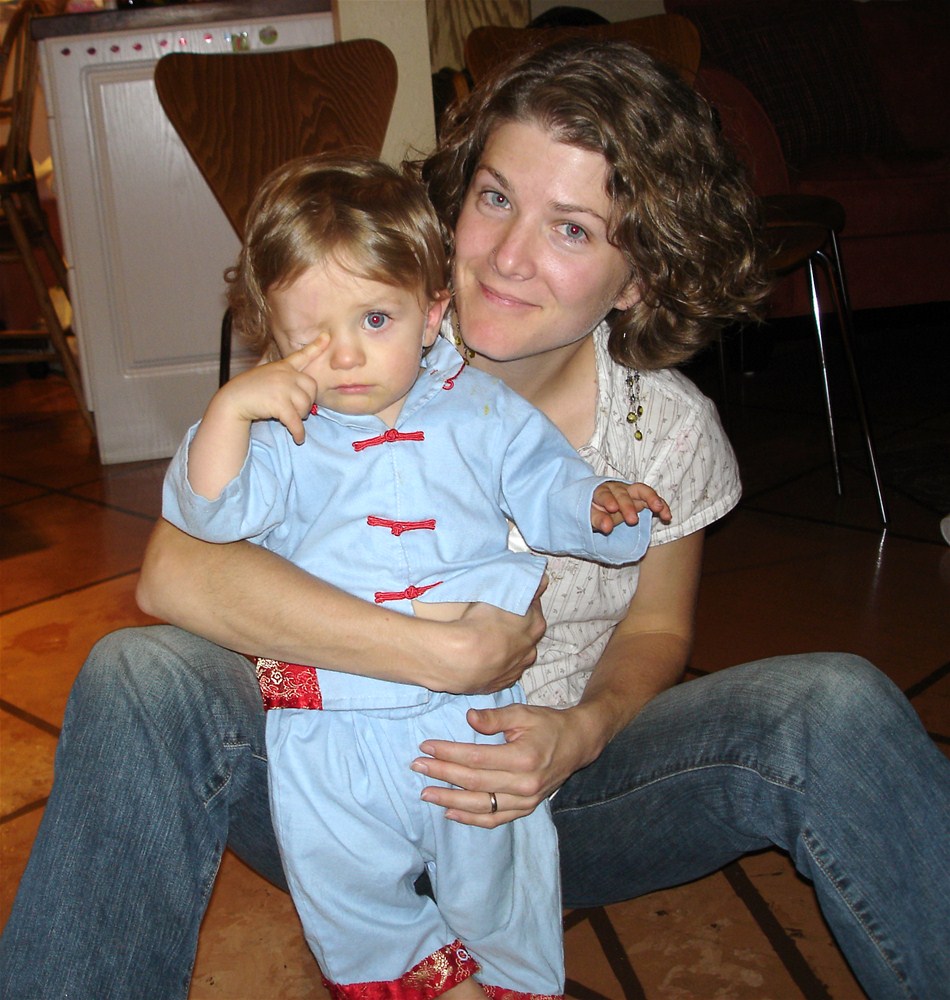
When our son was about 1½, a friend sent me an article about daily painting. This project was officially begun by artist Duane Keiser who decided to sell all his small studies for $100 each. This was a big hit, so he took it to the web. He created a blog called “A Painting a Day” and listed each small painting on Ebay starting at $100. He and others were actually selling a painting every day – making a living where they perhaps hadn’t been able to before with their art.
(<- Jacob and I)
My husband said, “You should do this!”, but I had my doubts. Surely, I would fail at this – as I had with everything else. But he kept poking and prodding me, saying, “C’mon, you’ve got nothing to lose.” So I ordered some small panels and one day, when our son went down for a nap, took out my paints, set up some onions, and painted them. It was in the same tight style I’d always worked in, took two full hours, and I hated not only the result, but the process as well. Unfortunately I don't have a picture of it as I wiped it off immediately after.
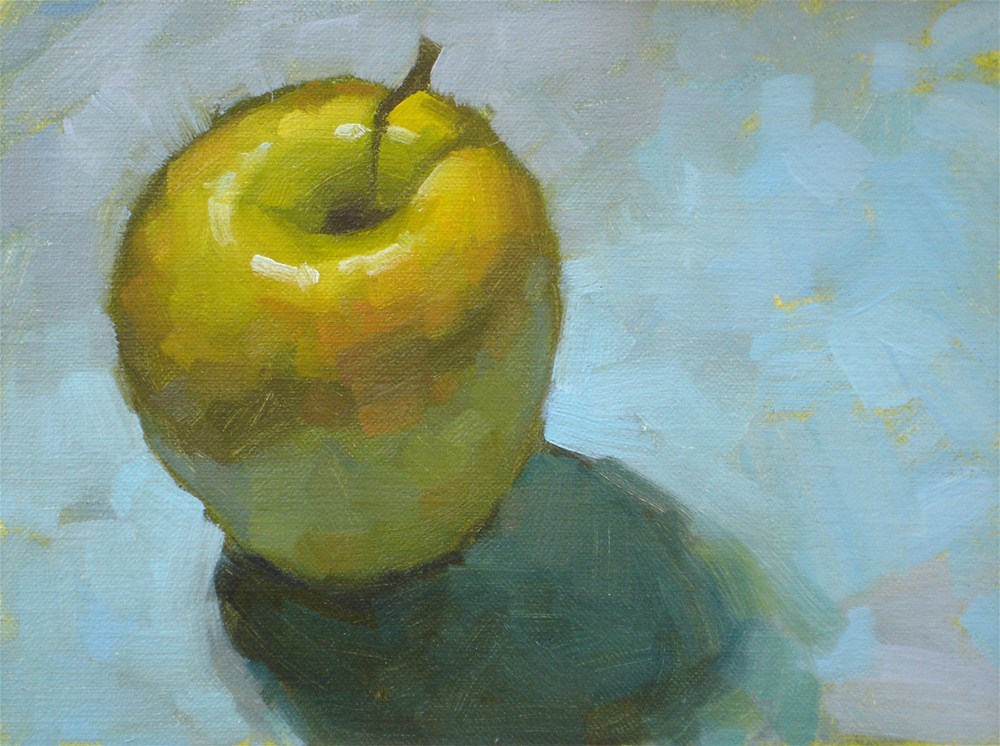 The next day, I decided not to repeat the experience. But once again, I had the expanse of nap time and all the panels, so I painted again, attempting a style I’d always wanted to try, but didn’t have the nerve to on one of my big, expensive, stretched canvases. What DID I have to lose?! I painted an apple and although it wasn’t a masterpiece, I loved it, both the painting and the process.
(my first apple)
I found such freedom to experiment in painting small and often. No longer did I feel overwhelmed by the huge number of things to paint – I could do it ALL. And I could do each item 50 different ways (or more)!
My fear of failing disappeared quickly—well, almost. Probably a little fear is good for us. I DO know I was no longer making excuses not to paint, and woke up every morning genuinely excited and eager to get into the studio. My depression was gone.
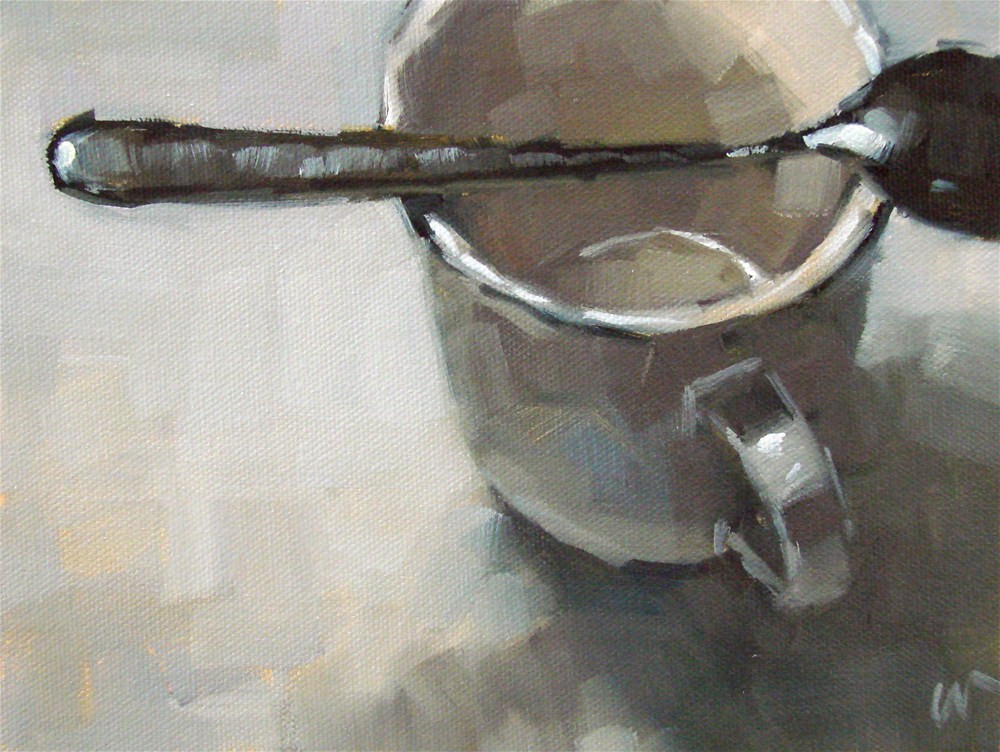 In less than a year, I had done a staggering 200 paintings - more than the total number I'd done in the five years previous to starting daily painting. Because I was posting my paintings on a blog, in sequential order, I could easily look back to the beginning and see progress. I found in those 200 paintings I had GROWN more than in the 5 previous years!
(<- number 200, or around there ...)
Fortunately, because I was painting during my son’s naps, I had a set time every day that I HAD to paint - or not at all. This lent structure to my routine. Because I was posting each painting on my blog, I had created a commitment for myself. If I missed a couple of days, I got emails from people saying, “What’s wrong? You haven’t been posting!”
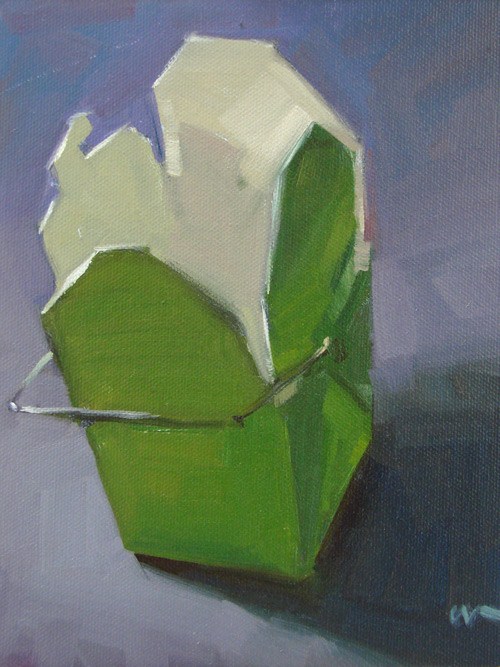 Previous to daily painting, whenever I’d finish a large painting, I had a hard time being honest with myself about whether it was worthy of being sent to the gallery or not. If it wasn’t, it was devastating, and after that much work, I did everything I could to convince myself it was good, even if I was deluding myself. With the small paintings, each panel cost about $1 and took one to two hours to paint. I found I could easily say to myself “That didn’t work,” wipe it off, and start over. I became less emotionally attached to each painting, even the larger ones, and could survive even a scathing critique with much more grace than before. Uhh, most of the time. (number 301->)
Because less ego was involved in each piece, I was enjoying painting fully. I had more confidence in myself as an artist which carried over to other aspects of my life. I had a way; I was happy; things were good.
As if this weren’t enough, my small paintings were actually beginning to sell. It was slow at first, very slow, but gradually I was selling almost all my paintings, and some were even being bid up. I was making a (modest) living in a world where earning your way as an artist is tantamount to climbing Mount Everest! (number 1111, below)
 At this time a lot of other artists started jumping on the daily painting bandwagon. They were all creating blogs, using mostly the same free service. Blogger.com has a feature that allows others to comment on each blog post/painting. A huge community of daily painters formed, all commenting on each other’s work. Whereas most artists find their work a solitary experience, we had found a new venue in which to share our art with each other (and the world). I can’t tell you what a boost it is to post a painting and within hours get comments from other artists saying (mostly) positive stuff about what I’ve created!
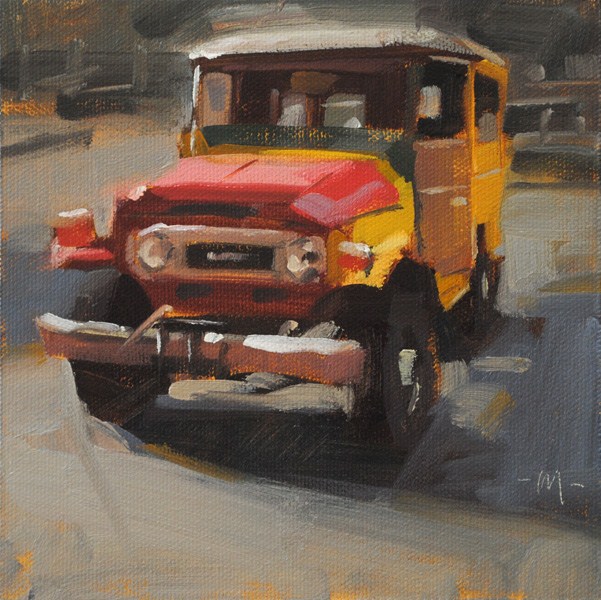
Before long I was getting invitations to teach workshops around the continent and to speak before various groups - all because I had put myself out there. It really is true - with the internet you have the potential to very quickly reach the whole world! (number 1421, below)
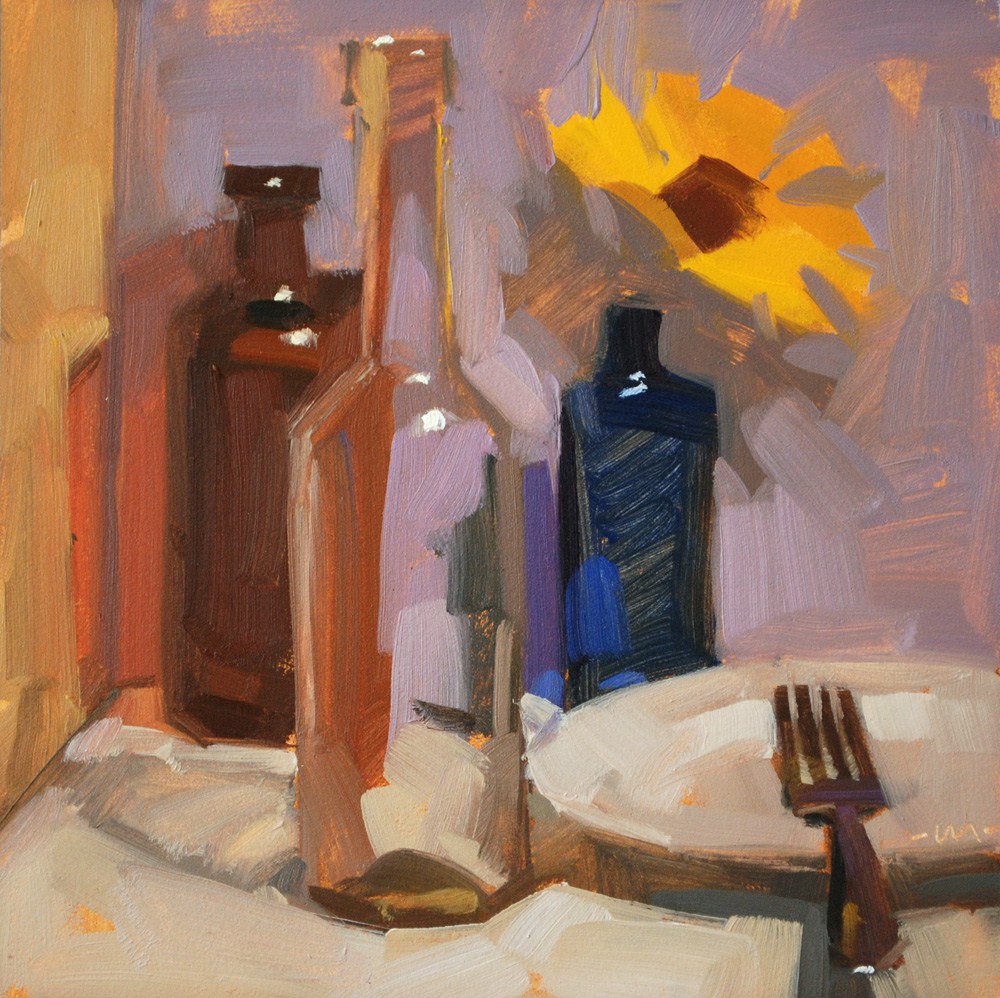 Thus far, I’ve talked about assessing my own work but one of the biggest things I’ve learned since I started daily painting, is - there is no predicting what will sell. Some of the paintings I’ve considered my worst, have sold for the most - and vice-versa. A wise person once told me “You don’t need to work to sell a painting – you only need to find the right person who wants to buy your painting.” And if you like it, chances are someone else will too.
I’ve been daily painting now for over 5 years and it has completely transformed my career and my life. I recommend it to anyone who is serious about their art. A friend of mine once implored me to spill my secrets as an artist and just tell her what to do, so she could instantly improve. But there aren’t any secrets. It’s like we’ve all got a painting muscle, and we’ve got to work it out, every day, in order to get better and stay better – just like exercise. That’s the only secret I know.